
Scorching June set the tone for much of the summer. Rolling heatwaves continued until the third week of August, when much needed rain and more changeable conditions returned through to the end of September.
Needless to say, temperatures and recorded sunlight were well above average with both July and August being the second warmest on record, with September not far behind (fourth warmest). While rain returned in mid-August, totals remained below average for the balance of the quarter. The impact on the Pond and birdlife was notable. The drought conditions saw the Pond’s water level recede to its lowest level in over 50 years, with significant muddy shoreline exposed at Sandy Bay, along the northern shore and in the Brookly Stream corner. The searing temperatures and lack of rain provided the near perfect conditions for algae blooms to prosper across the Pond.
For the birds, early breeding success withered as the summer heat progressed. Survival rates of hatched wildfowl young were particularly poor while it appears that many of the Reserves smaller breeding passerines packed up early, with very few attempting second broods. Consequently, later in the summer, the Reserve’s woodland and reedbeds seemed at times eerily devoid of birdlife.
Wildfowl and the like
The final tally on this year’s breeding Tufted Ducks was an impressive 23 broods and 90+ young hatched, but only an estimated 25 survived. Mallard breeding success was even poorer with only ten broods logged, from which only ten young were raised. Four broods of Gadwall could only raise four young. Of the three pairs of Pochard in residence, only one produced young, a brood of four, but sadly none survived. Likewise, 17 pairs of Coot produced a miserly 10-15 young and just the one pair of Mute Swan raised two young.
The reasons for the poor wildfowl breeding success are not known but likely include multiple contributing factors including this summer’s unrelenting heat, toxic algae blooms and predation. Underlying water quality may have been a factor too, as it was noted that the Pond’s turbidity was significantly higher this spring than it has been for the last few years. On the positive side, three pairs of Great Crested Grebe raised four young and it was a record year for Moorhen (image below) with a count of 90 on August 18th including 60 juveniles. A juvenile Water Rail was observed on August 12th, hinting at local breeding.
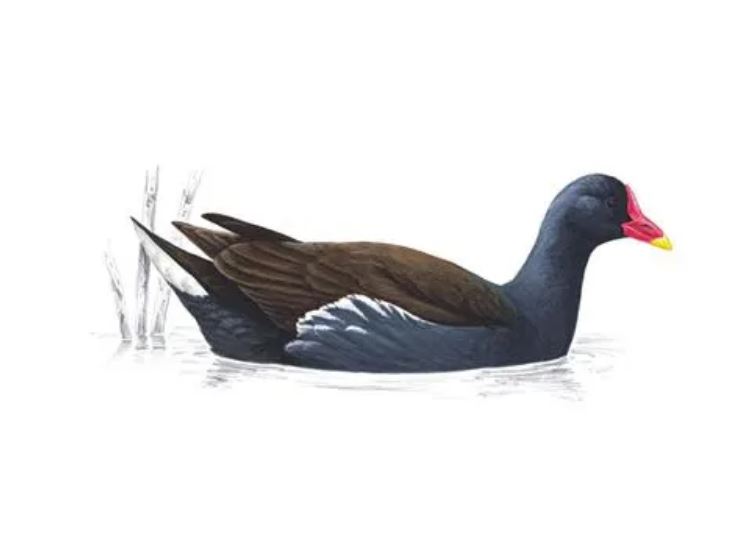
As in recent years there was an influx of wildfowl in late summer, feasting on pondweed, and while numbers were impressive by historical standards, they were down on the last few years with the bulk abruptly departing by the end of August, months earlier than usual.
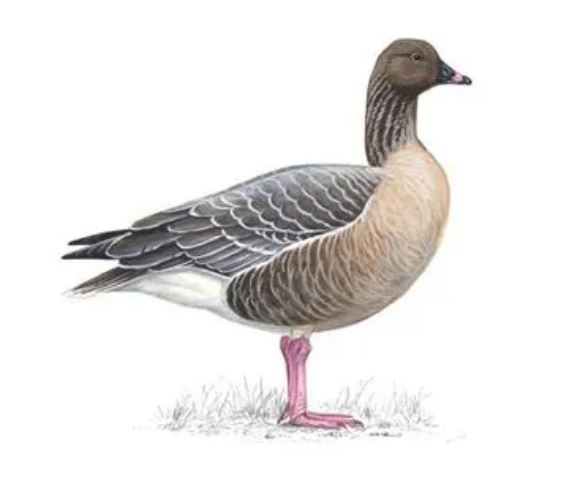
Peak counts included 275 Coot (Aug. 13th), 180 Gadwall (Aug. 14th), and 210 Mallard (Aug. 23rd). Shoveler numbers peaked at a disappointing 13 (Aug. 17th); however, the lower water levels and muddy shorelines did attract higher numbers of Teal which peaked at 31 (Sep. 3rd). As in previous years, there was the usual late summer build-up of geese that use the Reserve to roost and early morning counts included peaks of 294 Greylag Geese (Sep. 3rd) and 209 Canada Geese (Sep. 14th). They were accompanied by the single Pink-footed Goose (image below) which remarkably returned for its sixth year in a row to roost amongst the Greylag Geese. This year it was only sighted on September 2nd and 3rd. Sightings of less common wildfowl included a Mandarin Duck (Aug. 5th-7th) and four (Eurasian) Wigeon (Sep. 23rd). Single Little Grebes were noted on July 7th, August 2nd and 26th.
 Better Autumn for Migrant Waders
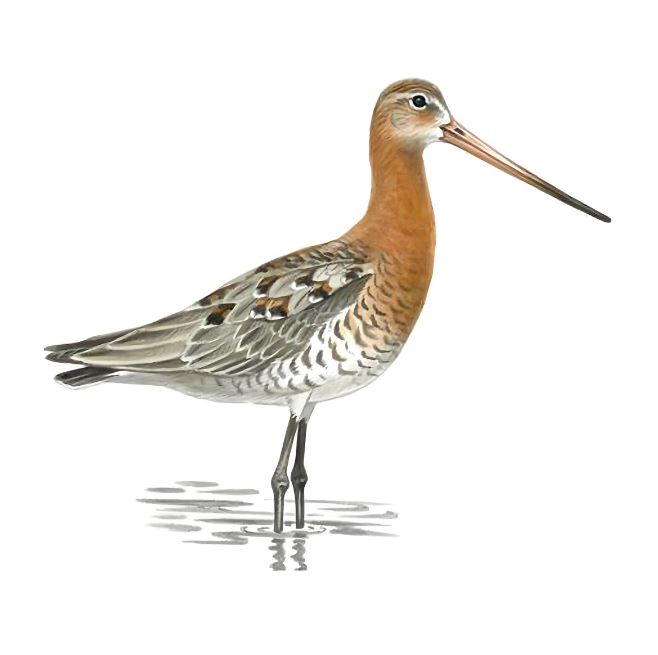
The lower water level and exposed muddy shoreline helped to attract significantly more migrant waders than usual from the third week of July into mid-September, most notably Green and Common Sandpipers. The first Green Sandpiper was sighted on July 18th, and they became a daily sight at the Reserve, peaking at six individuals on August 29th (a Reserve record), with the last sighting coming on September 6th. The first sighting of Common Sandpiper was on July 20th, with a peak count of three present between August 24th-29th, and the last coming from September 15th. Scarcer waders included two Oystercatchers flying over southwest on July 5th; two Greenshank on August 24th, one remaining into the 25th, with another present on 30th; and a Black-tailed Godwit (image below left) hopping along on one leg (the other injured) on August 27th-28th.
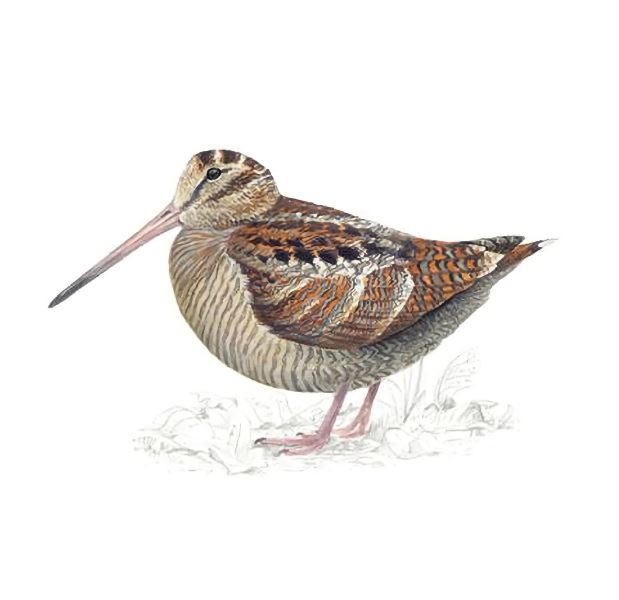
The most unexpected find was a Woodcock (image above right) feeding at the shoreline of the Little Pond on August 23rd. The only notable gull reported was a Mediterranean Gull on July 11th. The lower water levels also attracted plenty of herons and egrets, with up to ten Grey Herons present. Egrets included a peak of 12 Little Egrets at roost (July 29th) and there were a dozen sightings of Great White Egrets during the quarter including two on July 22nd and four on August 10th-11th (the latter a new Reserve record count). There were multiple sightings of Western Cattle Egrets too, all between August 22nd-26th that included three (an adult and two juveniles) on August 23rd and two juveniles on August 26th.
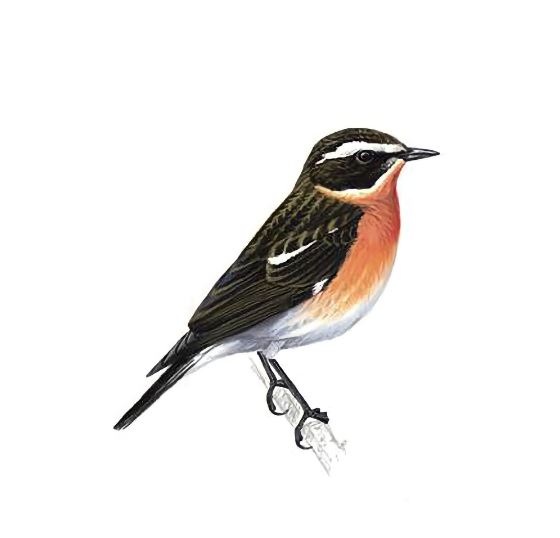 Notable passerine migrants included juvenile Dartford Warbler at the Dry Heath on August 16th, four Sedge Warblers on August 24th, a single Spotted Flycatcher on August 30th and a Whinchat on the MoD Fields (image above) on September 15th. However, counts of commoner warblers and chats were well below normal. The one bright spot was Firecrest which were seen throughout the summer, including three on July 30th, suggesting successful breeding took place within the Reserve.
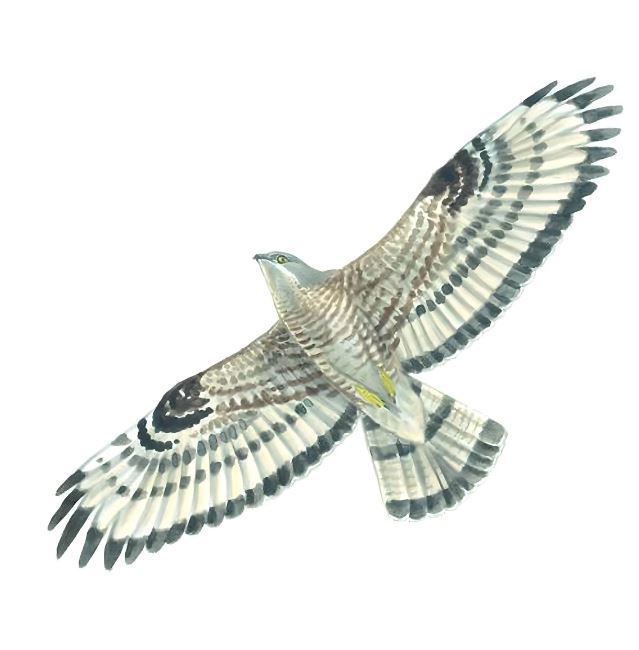
Raptors put in a good show too. Beyond the expected daily sightings of Red Kite, Common Buzzard and Sparrowhawk, Hobbies were logged on July 19th/20th and September 13th/14th and a Peregrine Falcon on August 18th. There was a report of a Western Marsh Harrier on August 8th but few details are available while an adult European Honey-Buzzard, (image below) likely a male, was photographed soaring low over the Reserve’s woodlands mid-morning on September 3rd.
 Notable visible migration (diurnal passage) was logged on September 14th with 635 (Barn) Swallows, 235 House Martins, 45 Sand Martins and 132 Meadow Pipits all heading over southwest in a three hour period. Roost counts during the quarter included 48 Cormorant (Sep. 13th) and 350 Jackdaw (Sep.2nd). Good birding!
William Legge
Contributing Observers: Arun Bose, John Clark, Steve Collins, Lewis Fairclough, Gary Fennemore, Jordan Fisher, Kabir Joshi, William Legge, Oliver Merrin, R. O’Connor, Vic Rodriguez, Daniel Rogers, Mike Simon, Sarah Slingo, Graham Stephenson.