How To Spot Butterflies

As you know, we are running a monthly series of articles on butterflies (see here and here for the April and May posts).

The Independent newspaper is running The Great British Butterfly Hunt and as part of this it gives tips on how to spot them. Here they are, as they might be useful whilst wandering around the pond or else in your back garden:

  • Butterflies are active in warm sunny weather, so choose days when the air temperature is above 14C and there is at least 50% sun
  • Butterflies are most active from 10am to 4.30pm
  • Most species like sheltered, sunny positions to bask or feed. Try sheltered gardens, parks, derelict land, hedgerows, tall grasses, bramble, wild flowers, woodland clearings or south-facing slopes (take care)
  • Certain garden plants are magnets. Butterflies visit to drink nectar through a long coiled proboscis (like a drinking straw). In spring, try dandelions and sweet rocket. In summer: buddleia (the “butterfly bush”), scabious, thistles, brambles and herbs in flower like majoram and thyme.
  • Approach slowly. They have all-round vision. Any quick movement will make them take off.
  • If you are lucky enough to live near chalk or limestone grassland, several beautiful and rare species of blue butterfly thrive in short-grazed vegetation.
  • Carry a picture guide or poster.
  • Binoculars can be very useful.
  • Follow a feeding butterfly to where it lands to feed. This sometimes offers a better look at its underside markings, helpful for identifying species like the green-veined white.
  • Three don’ts. Don’t handle caterpillars; they are delicate. Don’t catch butterflies with bare hands; their scaly wings do not regenerate. And try not to trample vegetation or wild flowers which may be used for breeding.

If you spot a species you can even add a sighting online, see here.

May Wildflower Watch – Bogbean, Garlic Mustard and Skunk Cabbage

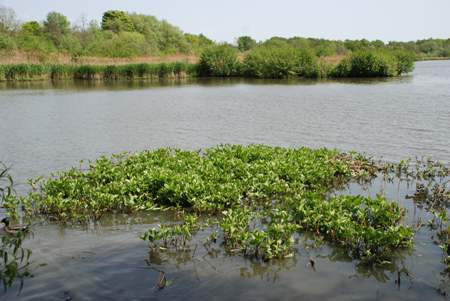
Bogbean at Hemelite Bay

Michelle Salter writes:

The pretty, white flowers of Bogbean have been appearing along the edges of the reedbeds at Hemelite Bay. Bogbean is a creeping aquatic perennial that grows along the sides of lakes, ponds or slow-flowing rivers. Often forming large colonies, Bogbean plants help to protect the greenery of the reedbeds against damage from Canada Geese.

Bogbean flowers
Bogbean flowers at Hemelite Bay

The flower buds of Bogbean are rose-pink and open up into feathery white stars as the petals are fringed with white threads. The plant has distinctive three-lobed shiny leaves raised on long stalks to avoid shade. The leaves of Bogbean have been used to flavour beer, giving the plant the alternative name of ‘bog hop’.

Garlic Mustard
Garlic Mustard by railway footpath

Garlic Mustard, also known as Jack-by-the-Hedge, because of the long lines of white flowers that form alongside hedges in spring, is currently in flower and can be seen at the side of the footpath by the railway.

When crushed, the leaves have a distinct smell of garlic, and the flowers attract a large number of moths and butterflies, including the colourful Orange-tip.

Skunk Cabbage
Skunk Cabbage in Brookly Glade

The dreaded Skunk Cabbage, Lysichiton americanus, has been popping up all around the pond’s margins, originating from the large patch that grows just over the fence by Brookly Bridge. This patch of Skunk Cabbage marks the remains of what was once a private garden that housed other exotic imports, such as bamboo, which can be seen growing vigorously along the stream’s banks.

Skunk Cabbage is thought to have been introduced to this country from North America in 1901. A marginal aquatic perennial that grows in boggy areas and shallows, the plant seeds freely and will soon spread the full length of a stream and beyond. Sizeable clumps are now appearing all around the pond; these can cause problems as they shade out other vegetation.

Skunk Cabbage is so named because of the strong, musky scent the flowers produce to attract pollinating insects in spring. Its huge green leaves can grow up to a metre tall. The striking yellow flowers that recently appeared are now being followed by knobbly seed heads.

Bluebells at Sandhills

For a pleasanter fragrance, try walking along the banks at Sandhills where there are still some lovely displays of bluebells.

Next month: Watch out for the tall flowers of Yellow Flag iris which are already starting to appear around the pond.


Picture credits: Michelle Salter


Sights From The Dry Heath

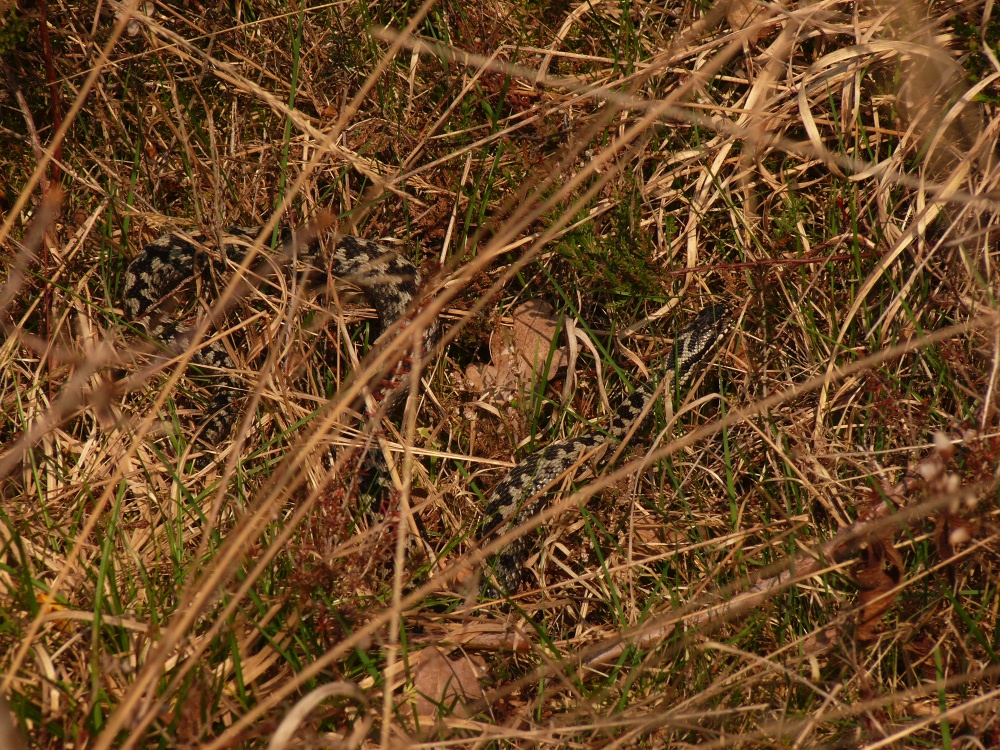
davidb adder small
Adder

David Buckler writes:

I came across this silvery male adder (above) next to the path through the centre of the Dry Heath basking in the warm sunshine. The males tend to come out earlier than the females, for territory and mates. It is best to keep to the paths, (and dogs on a lead), in the spring, as adders tend then to be slower reacting in avoiding us. In the summer they are much more alert, and can sense us by vibration, hiding away. 

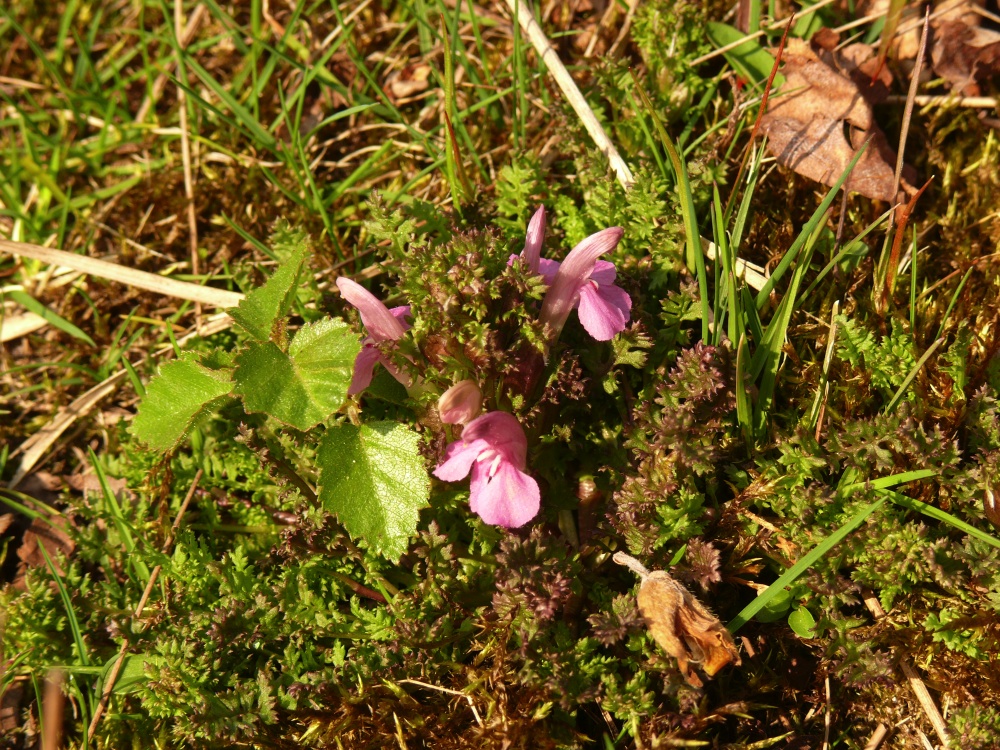
davidb lousewort small
Lousewort
Lousewort (above) is out now beside the path through the Dry Heath to the picnic site. In olden days people used to fill their bedding with this to deter fleas and lice, hence the name.
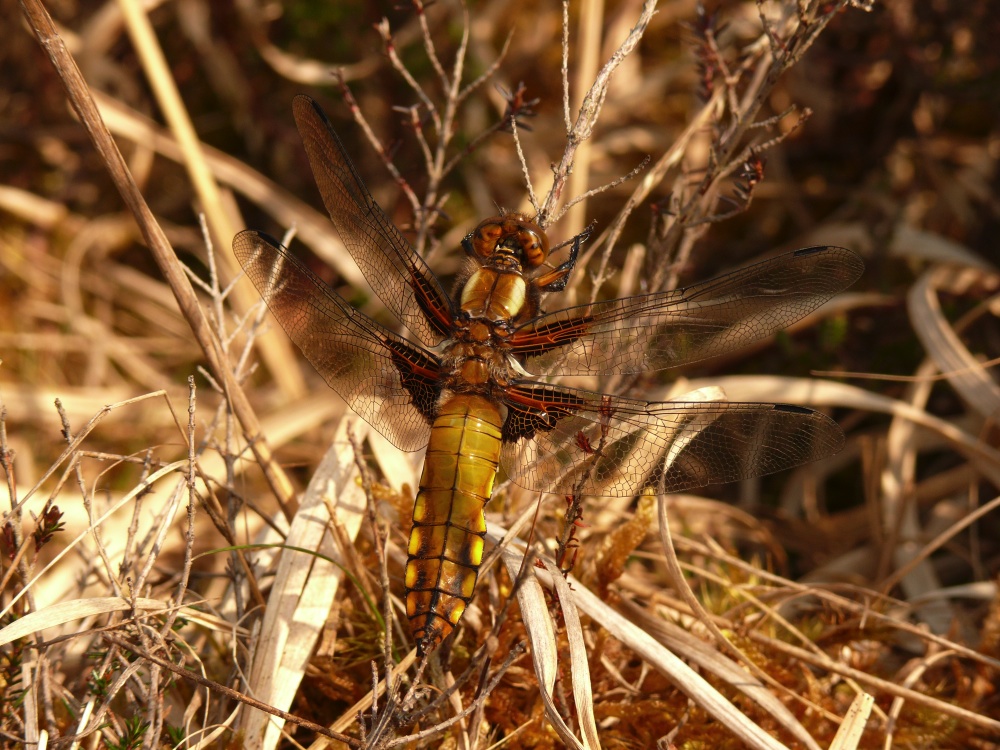
davidb broad-bodied chaser small
Broad-bodied chaser
This dragonfly (above) was a surprise being out so early, looking as if it had just hatched from the larva, so was resting, and warming in the sun. They usually inhabit woodland near ponds. This species, and the Four-Spotted Chaser, (which can be seen in large  numbers later, with it’s four bold black spots, whizzing around the scrapes on a hot day), have benefitted from the creation of the scrapes on the marsh, they both like newly created ponds, dragonflies being very specific in their requirements.

Picture credits: David Buckler

In case you are unfamiliar with the location of the Dry Heath, please see the Fleet Pond map in the About page above.


BBC Countryfile Photographic Competition 2009

bbc countryside people

Last night BBC Countryfile had a section, fronted by Jo Brand and Chris Packham, on their Photographic Competition 2009.

The theme of the competition is ‘Wild and Wonderful’ and is open to individual interpretation. The competition entry rules are here.

Maybe a suitable shot from Fleet Pond Nature Reserve might make a strong entry?

Chris Packham, the well-known TV-presenter, photographer and author, is the Patron of Fleet Pond Society.