All posts by David Pottinger

April Volunteer Event – Saving Our Banks!

getting-started-april

Picture: Explaining What To Do

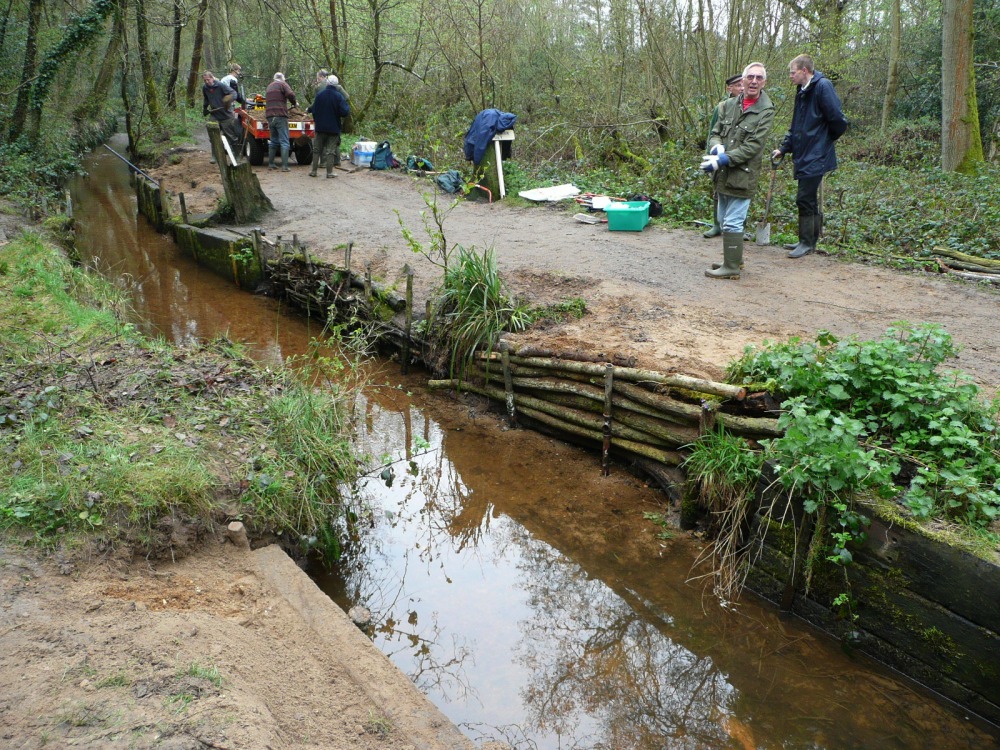
Even though it was Easter Sunday, there was a very good turnout! The aim of April’s task was to repair the stream banks (on both sides) near the Gelvert Bridge (see map on About page above). These have become badly eroded by the floods of last season and temporary repairs were needed. When the rangers have enough funds, the overflow problem will be handled by raising the bridge (other solutions are also being considered).

Poles were driven in to the sides to allow insertion of a sleeper on one side and old logs on the other. The sleeper was extremely heavy as it was waterlogged – so plenty of hard work was required (see photo below). The infill material was taken from Sandy Bay using a tractor and supplemented by overflow sand from the side of the bank itself.

getting-stuck-in-april

Picture: Getting Stuck In With A Sleeper

This task was a project under the CSV Action Earth initiative (Title: ‘Save Our Banks’). Action Earth provides grants of up to £50 (funded by Morrisons) to assist groups in England, Scotland and Wales in carrying out environmental projects. Information on a previous Action Earth task carried out by Fleet Pond Society is here.

group-photo-april1

Picture: Group Picture (CSV Action Earth).
final-results-april

Picture: The Final Results – A Good Job Done!

I appreciate that getting out of bed on a Sunday morning to do conservation work may not be to everyone’s taste but, take my word for it, working in an easy-going team and making a real difference can be very satisfying and we’re always keen on new volunteers! Contact details on About page.

April Wildflower Watch – Venison and Onions in Brookly Glade

Alliums in Brookly Glade

Michelle Salter writes:

If you catch the scent of fried onions as you walk through Brookly Glade this week, it’s not your imagination. Amongst the beeches in the glade, alliums are currently in flower and giving off a strong, oniony fragrance. The variety here is the Caucasus immigrant, Allium paradoxum, known as Few-flowered leek or garlic. Part of Brookly Glade was once a privately owned garden, hence the number of imported flora in this part of the nature reserve. The British variety, Three-cornered leek, has a three-cornered cross-section of the stem and is larger and smellier than our imports.

After I’d photographed the alliums, I turned to find I was being watched. A pair of roe deer were standing under the trees on the other side of the fence, enjoying the sunshine. They didn’t appear to be disturbed by my presence and this fellow obligingly posed for the camera.

Roe Deer in Brookly Glade

Picture credits: Michelle Salter

April Wildflower Watch – Wood Sorrel, the Easter flower

Wood sorrel by the Gelvert Stream

Michelle Salter writes:

The flowers of Wood sorrel (Oxalis acetosella) traditionally appear between Easter and Whitsun. This has led to the plant becoming popularly known as Alleluia throughout Europe.

This Easter, the delicate white, veined flowers can be seen in clumps either side of the path that runs alongside the Gelvert Stream passed the bridge towards Sandy Bay. A shade-loving plant that often forms large groups, Wood sorrel loves damp, mildewy soil and can grow in locations that see only one percent daylight.

The distinctive leaves of Wood sorrel have led many botanists to suggest that it was actually the original Irish Shamrock, rather than clover. St. Patrick is thought to have used the trifoliate leaves of Wood sorrel as his visual aid when he preached the Holy Trinity.

The three drooping, heart-shaped leaves are connected to the leaf stalk by limbs that undergo different movements. In normal shade or diffused light they lie fully open, whereas at night or in direct sunshine they droop downwards and fold onto their stem in a ‘sleeping position’.

Wood sorrel along Gelvert Stream footpath by Sandy Bay

Picture credits: Michelle Salter

Related blog post: May 2013 Wildflower Watch – Wood sorrel

Butterfly Of The Month: April – The Brimstone

butterfly-brimstone

Peter Martin writes:

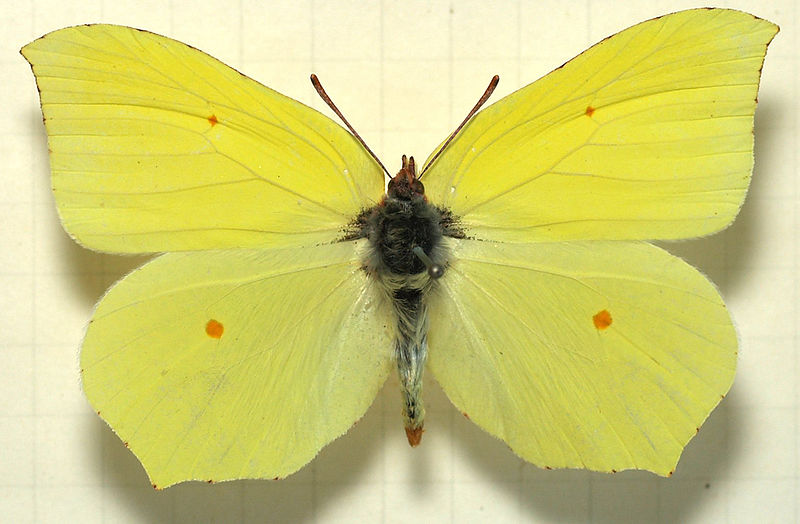
The Brimstone butterfly is regarded as the “harbinger of spring”, as the male is so noticeable due to its “brimstone” colouring when it flies strongly after its winter hibernation. Females are a more whitish-green and are, therefore, often mistaken for Large White butterflies.

This is a particularly good year for the Brimstone, as I have already seen them in the garden on several days. One year, I saw 14 on one day at Fleet Pond Nature Reserve.

After courtship, the female lays her eggs singly under a young leaf or on a stem of Alder Buckthorn or Purging Buckthorn. Between April and early July, a single female may lay 200 to 300 eggs. After about ten days, each egg will hatch and the resulting green caterpillar rests along the mid-line of each leaf when not chewing holes in it. Due to its green camouflage, it is often easier to spot the holes than the caterpillar itself.

On reaching full size, the caterpillar pupates by suspending itself under a leaf. This too is well camouflaged, until the yellow colour of its wings show through just before the beautiful butterfly emerges. The new generation of butterflies can be seen on the wing from mid-July onwards.

Brimstone butterflies can live ten months or more, if we include the hibernation period. They spend the winter in hollow trees among the fronds of ivy, where their colour blends perfectly with the leaves.

Odd Commas, Peacocks, Small Tortoiseshells or even Red Admirals may be brought out of hibernation by the warm and sunny days during the mild winters that we now experience, but it is the Brimstone that really demonstrates that spring has arrived.

Picture credit here.

Visit this blog in May for information about the Orange Tip.

Peter Martin has acted as author for a booklet entitled “Blackwater Valley Butterflies” which contains photographs of all 32 species found in this area together with information about their life-cycles. Copies are available for £2.50 plus £1.00 p.p. from Blackwater Valley Countryside Partnership, Ash Lock Cottage, Government Road, Aldershot, Hants. GU11 2PS. (Cheques should be made payable to B.V.C.P.).

March Wildflower Watch – Lesser Celandine and the Brookly Stream

Lesser Celandine on banks of the Brookly Stream

Michelle Salter writes:

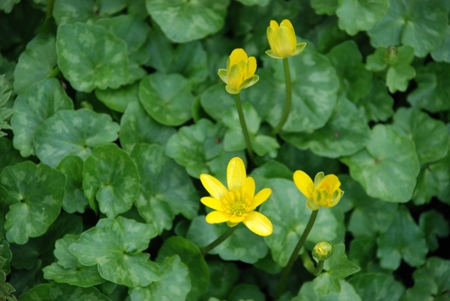
As you cross Brookly Bridge, the yellow flowers of Lesser Celandine (Ranunculus ficaria) are currently bringing some welcome colour to the banks of the stream. A member of the buttercup family, Lesser Celandine is one of the earliest spring wildflowers to appear and provides nectar and pollen for bees emerging from hibernation. Visible only when in bloom from March to May; Lesser Celandine dies back completely after flowering.

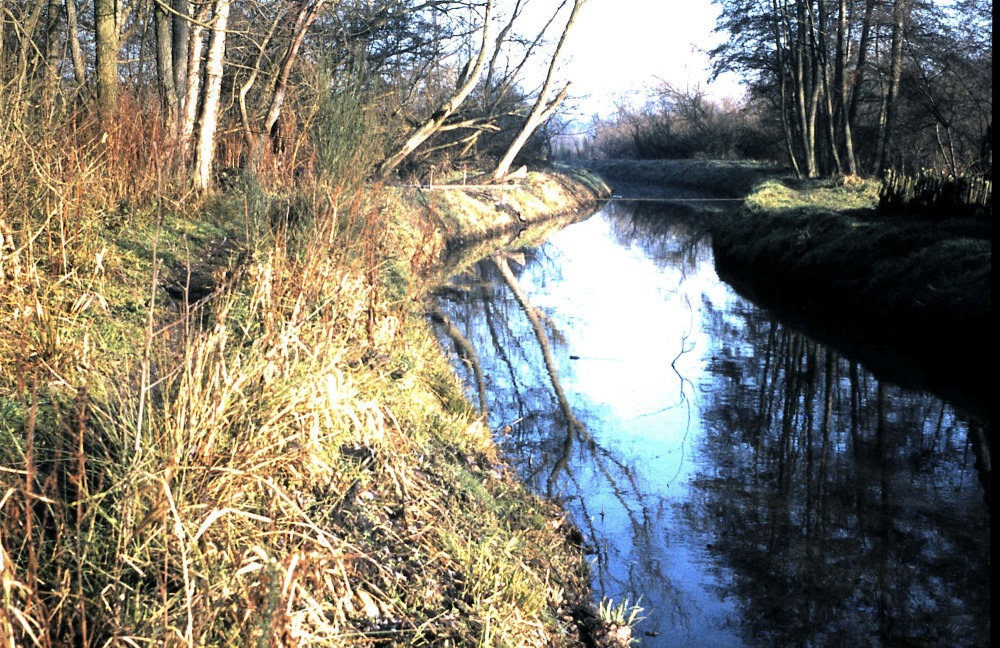
Brookly Stream in 1977

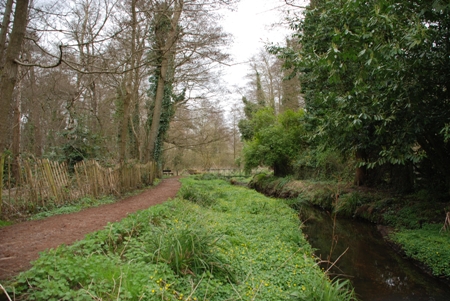
The photo above shows Brookly Stream before the bridge was erected in 1977 (you can just make out a thin plank laid across the water to allow the team of volunteers, preparing to install the new bridge, to reach the opposite bank). If you compare it to the picture below, look at the difference in the width of the stream and the lack of mud banks in the older photo. The celandine seed, brought down by the stream, has grown up along the banks of the deposited silt.

Brookly Stream in 2009

The yellow flowers of Gorse (Ulex europaeus), a traditional heathland plant, can also be seen coming to life all around the pond, in particular on the Dry Heath and at Sandy Bay. A member of the pea family, the bright golden flowers of gorse have a gentle coconut fragrance and provide nectar for early emerging Brimstone butterflies.

Gorse at Sandy Bay
Gorse at Sandy Bay

Photo credits: Michelle Salter

Brookly Steam 1977 photograph courtesy of Colin Gray.