RSPB Winter Walk – Birds In The Woodland

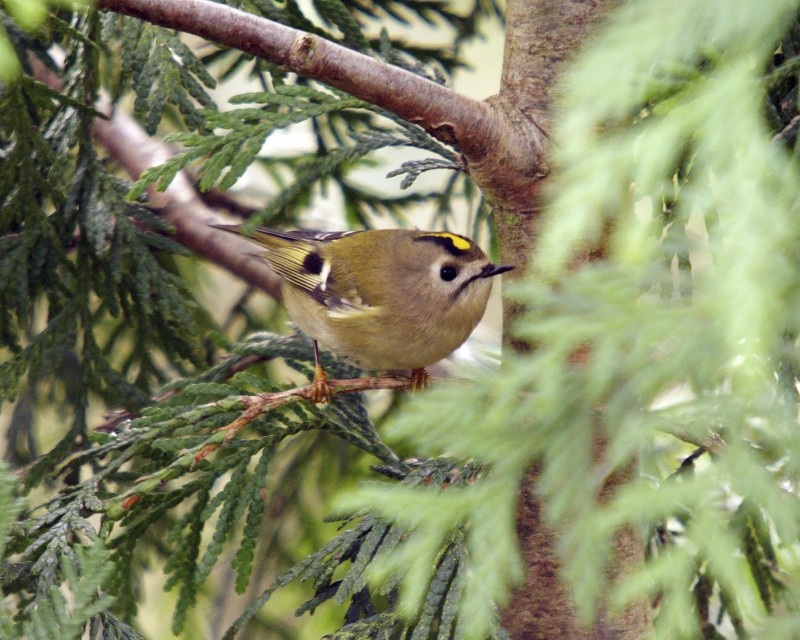
goldcrest-on-conifer

Picture: Goldcrest

On Sunday 21st December 2008, Peter Hutchins of the RSPB Basingstoke Local Group led a walk around the pond for seven members of the group, on their last outdoor meeting of the year.

The walk had two aspects, the Pond (earlier post) and the Woodland (this post).

For those of you unfamiliar with locations around the Pond, the About section of this blog gives a map. For information on birds, see RSPB and Wikipedia.

The report by Peter Hutchins of the morning’s events is as follows:

In thinner birch woodland, east of the pond, we saw active mixed tit flocks immediately, these far more energetic than the Black-headed Gulls drifting in overhead from the north. Magpie and Woodpigeon fed out in the open, whilst Robin and Wren were more elusive, their calls attracting our attention as they skulked. A Great Spotted Woodpecker was also vocal, eventually showing itself to the group, though only as a silhouette before moving off with its characteristic undulating flight. Goldfinch and Cormorant were also on the move, the former often from tree to tree, the latter circling over the pond before dropping in to join others already fishing there.

At Boathouse Corner a Siskin appeared overhead, a single bird that was not to prepare us for later. Dunnock and Goldcrest called, as we headed south, past Chestnut Grove.

Brookly Wood, on the south-western edge of the pond, was busier. Increasing numbers of Siskin coming in to feed in alder attracted a scattering of Lesser Redpoll, a minimum of 150 of the former being seen as a Sparrowhawk encouraged them into the air, whereas less than a handful of the latter were noted at any time. A Kingfisher was vocal about the woodland streams and another Great Spotted Woodpecker proved equally vociferous, though at least this bird was good enough to allow viewing for some time before moving again out of sight. The tit flocks here included the first Long-tails of the day, acrobatic about the spindlier honeysuckle stems and collectively verbal as they gleaned for invertebrates.

Picture: Common Kingfisher

Dense scrub on the edge of Kenilworth Wood held the watchers for some time, finches, thrushes and tits all progressively appearing from within the mass of tangled vegetation. A Redwing, at first heard hissing, and then sat in the open. This single bird was perhaps another indicator of just how mild it currently is? Siskin and Lesser Redpoll streamed over the treetops in voluble parties, the mass of alder cones not enough to allow them to settle as alarm ran through the flock repeatedly

The party split, well one went walk-about, as we headed towards Sandy Bay. The lost soul picking up two Grey Wagtail, Nuthatch and Treecreeper as compensation for the absence of the Group!

Back in to the woodland and the final side of the pond was covered. Tits and Goldcrests appeared in the skeletal remains of Coldstream Wood, some, though not all, managing to hear the shrill piping of the crests as they explored the remnants of the foliage still clinging stubbornly to otherwise naked branches. Open grassland at the back of the Sandhills added another thrush, the one and only Mistle of the day, as it sat close in to the woodland edge.

This report is an edited version (kindly provided by Michelle Salter) of the complete version that appears in the RSPB Basingstoke Local Group January 2009 Newsletter.

Picture credits: Goldcrest (iStock, courtesy of Michelle Salter) and Common Kingfisher.

PS Apologies for the error in the original blog post that had the picture of the Common Kingfisher accidentally incorrectly titled and referenced. Thanks to Peter for pointing this out.

Fleet Pond Nature Reserve Under Threat!

waterfrontbp-plan-1

Picture: Waterfront Redevelopment Plan

Well, that’s a bit of an exaggeration but this IS a very serious matter (and hence this post is a bit longer than usual).

There is an application for the redevelopment of the Waterfront Business Park near Fleet Railway Station by Helical Bar plc. This application will have obvious and undesired implications for Fleet Pond Nature Reserve.

From Hart District Council (my emphasis in bold):

“Last February (2008) the Council refused planning permission for the redevelopment of the site for 206 dwellings, for a number of reasons, including the loss of the site for employment purposes. An appeal has been lodged against this decision to the Secretary of State and an inquiry is due to commence on 6 January (2009) at the Civic Offices in Fleet

and

“Any person or local body who wishes to make representations on any part of the Waterfront development, be that the principle of the residential development of the site, the layout, or the community infrastructure which they consider might be necessary if the appeal were to be allowed, is welcome to attend the Public Inquiry to give their views to the Planning Inspector.”

Full details on the proposed development can be found elsewhere on the Hart web site.

If you have time this Tuesday and are concerned about this matter, we strongly encourage to you to call in, even if for only a short time, to register your interest.

Colin Gray, Chairman of Fleet Pond Society, will be a making a formal objection speech as part of the appeal and here is an extract:

“Fleet Pond Society objects to the construction of blocks of 185 flats and 17 three-storey houses on land currently used for employment. The local authority has a recognised deficit of small business and industrial units in Hart District and it goes against their policy of retaining employment land to permit any change of use of this site.

The implications for Fleet Pond Local Nature Reserve and for the land immediately adjacent to the development site which is also notified Site of Special Scientific Interest are significant. There will be an unacceptable increase in disturbance from some 400 or more people who, with the totally inadequate allocation of open space within the development site, will see Fleet Pond as their back garden. Children need open space for exercise; places where they can have freedom to play ball games, ride tricycles and bicycles in a safe environment close to their homes and within sight of parents. There is no provision for informal play on the development site and this has potential for further erosion of the informal and quiet ambience of the nature reserve.

Fleet Pond is not a public park nor is it a country park; in 1977 Hart District Council designated Fleet Pond as a Local Nature Reserve, which requires any amenity facility or public recreation to take full account of the potential impact on the wildlife. People come to Fleet Pond and enjoy it for its appearance of naturalness and lack of formal man-made structures other than those needed for fishing, for bridging water culverts or providing dry footways over very wet ground. We have installed fencing around those areas which are managed by grazing, but where possible these are placed such as to be as invisible as possible. It is an unfortunate fact that we will need to increase the number of areas that will need to be fenced for their protection. There is always a small minority of irresponsible dog owners who allow dogs to run free and uncontrolled through sensitive wildlife sites and people who walk off the marked paths, trample ground plants and disturb wildlife in the sensitive areas. This can only increase with increases in population.

We were pleased to see an education centre included in this application but our first responsibility must be to the potential impact on the SSSI from such a high density of dwellings.”

We will be keeping you informed of progress.


RSPB Winter Walk – Birds At The Pond

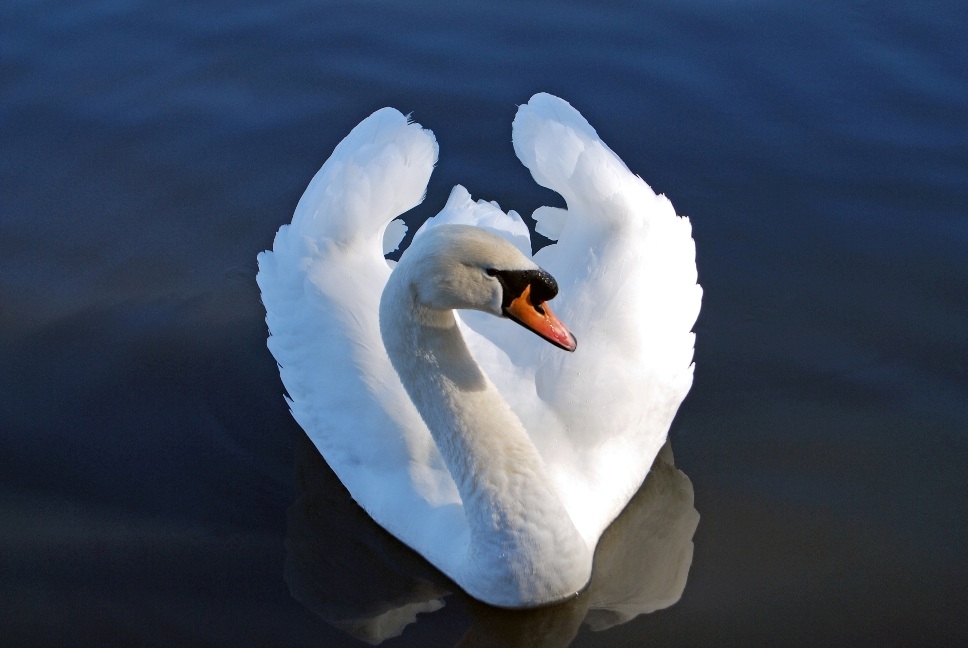
swan-at-pond

On Sunday 21st December 2008, Peter Hutchins of the RSPB Basingstoke Local Group led a walk around the pond for seven members of the group, on their last outdoor meeting of the year.

The walk had two aspects, the Pond (this post) and the Woodland (a future post).

For those of you unfamiliar with locations around the Pond, the About section of this blog gives a map. For information on birds, see RSPB and Wikipedia.

The report by Peter Hutchins of the morning’s events is as follows:
Boathouse Corner provided our first view of the open water, a Water Rail calling from the seclusion of scrub and reeds on the water’s edge. The Black-headed Gull were joined on the water by two Lesser Black-backed Gull, whilst resident wildfowl included a few pairs of Canada Geese, a single island-hugging Greylag, four winter-plumaged Great Crested Grebe and a drake Shoveler, distant and brief as it swum out in and out of reeds on the southern side. Grey Heron were seen in flight, an adult showing particularly well as it headed low over the water westwards.

Hemelite Bay, in the north-western corner, played host to a Kingfisher that allowed all to see it before heading back out over the pond, past further Canada Geese, Mallard and Moorhen. A singing Siskin also put on a show; though being hidden behind a tree trunk only the extremities could be seen before it too moved on.

We headed south to the main viewing, and definitely feeding, platform by Chestnut Grove. Here Mute Swan, Mallard, Moorhen and the only Coot on the pond, fed close to hand, the Greylag remained ensconced on its island refuge, Great Crested Grebe dived further out and the gulls and Cormorants completed the bird jigsaw still further in the distance.

Heading to the southern side of the pond and looking back northwards, over Fugelmere Bay, added an adult Herring Gull distantly consorting with its smaller relatives, then two adult Common Gulls joined in the stream of larids to and from the ponds surface. A Great Crested Grebe loitered close to the safety of reeds and overhead both silhouetted Jackdaw and Greenfinch were more easily picked out by their utterances. A brief fish breaching several times was thought to be a carp – well by me anyway!

great-crested-grebe

Picture: Great Crested Grebe

We headed towards Sandy Bay, where Mallard were busy about Fir Tree Island and, further back still, Cormorant were scattered like used and blackened candles on the icing of Cormorant Island. Far distant were two Grey Heron, both hunched morosely in trees. The now slightly choppier water still held just gulls, the four species all being seen again, and the wildfowl formerly noted. The clouding had broken a little but we were soon to be back under cover and missed any benefits this may have brought.

Finishing off back at Boathouse Corner, viewing out over the pond found a brisker, more chilling wind, moving in from the west, seemingly having drifted in more wildfowl and gulls to this corner. Though the local family leaving as we arrived were more likely to have had an effect on the birds, with perhaps a crumb or two having been cast for the resident birds? These included a pair of Canada Geese, perhaps not so resident but now taken for granted after many years of introduced status.

Two Grey Heron moved off across our field of view and the Greylag was seen to have at last vacated its island, thrashing about in the shallow margins as it bathed. A Sparrowhawk drifting high to the west passed in front of clouds that had once again split just briefly to allow the sun to hint at what might have been.

This report is an edited version (kindly provided by Michelle Salter) of the complete version that appears in the RSPB Basingstoke Local Group January 2009 Newsletter.

Picture credits: Swan (Michelle Salter) and Great Crested Grebe.


A Typical Sunday Volunteer Event!

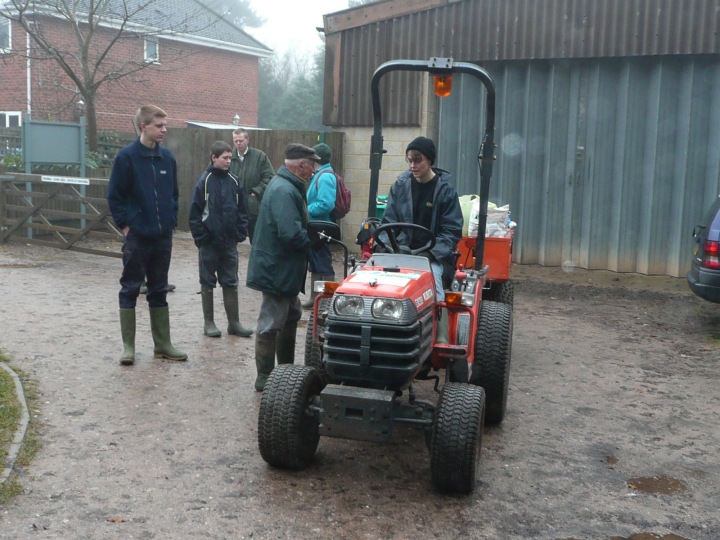
dec-tractor-small
We’ve had a number of posts advertising the Sunday volunteer events (schedule here), some before and after photo-shots as well as a volunteer spotlight (search this blog for details). In this post, I’ll go through what happened at the event on December 14, as this is fairly typical.

It starts with everyone assembling at the Countryside Workshop, Old Pump House Close (next to 65 Kenilworth Road) at 9.30. Typically about 8-10 people turn up (both sexes and with a wide range of ages). Tools and equipment suitable for the job at hand are loaded on to the tractor trailer and everyone walks to the site (photo above). When there, the team leader describes the purpose of the task, how it’s going to be carried out and also explains the health and safety aspects. For the event on December 14, the trees in the picture below needed to be cut down.

dec-start-small

In mid-morning there is a break for coffee, tea or chocolate plus some amazingly good munchies! As this was the last event before Christmas there were some extra celebrations as well (below).

dec-break-small

The event ended by either stacking or burning the trees that were chopped down (below).

dec-fire-small

Volunteering on a Sunday morning may not sound that enticing but if you like being in the fresh air and working within a friendly team for a good common purpose, it’s certainly something that’s worth thinking about and hopefully giving a try!

The next Sunday volunteer event will be on 11th January 2009.