All posts by David Pottinger

Decision on Waterfront Park: Part One Won!

waterfront_business_park_en

In case you have not yet heard, the Secretary of State followed the Inspector’s recommendation to dismiss the appeal.

The summary of the conclusions is here and the full details can be found here.

For local press reporting of this decision (Get Hampshire) see here.

Please note that this is unlikely to be the end of the story.  The appellant has the right to challenge her decision and, she says, should the applicant come up with a more acceptable design including open space on site she might be minded to be more sympathetic.

For background, please see the earlier blog post ‘Fleet Pond Nature Reserve Under Threat‘.

Picture credit here.

Butterfly Of The Month: June – The Small Heath

Small Heath

Peter Martin writes:

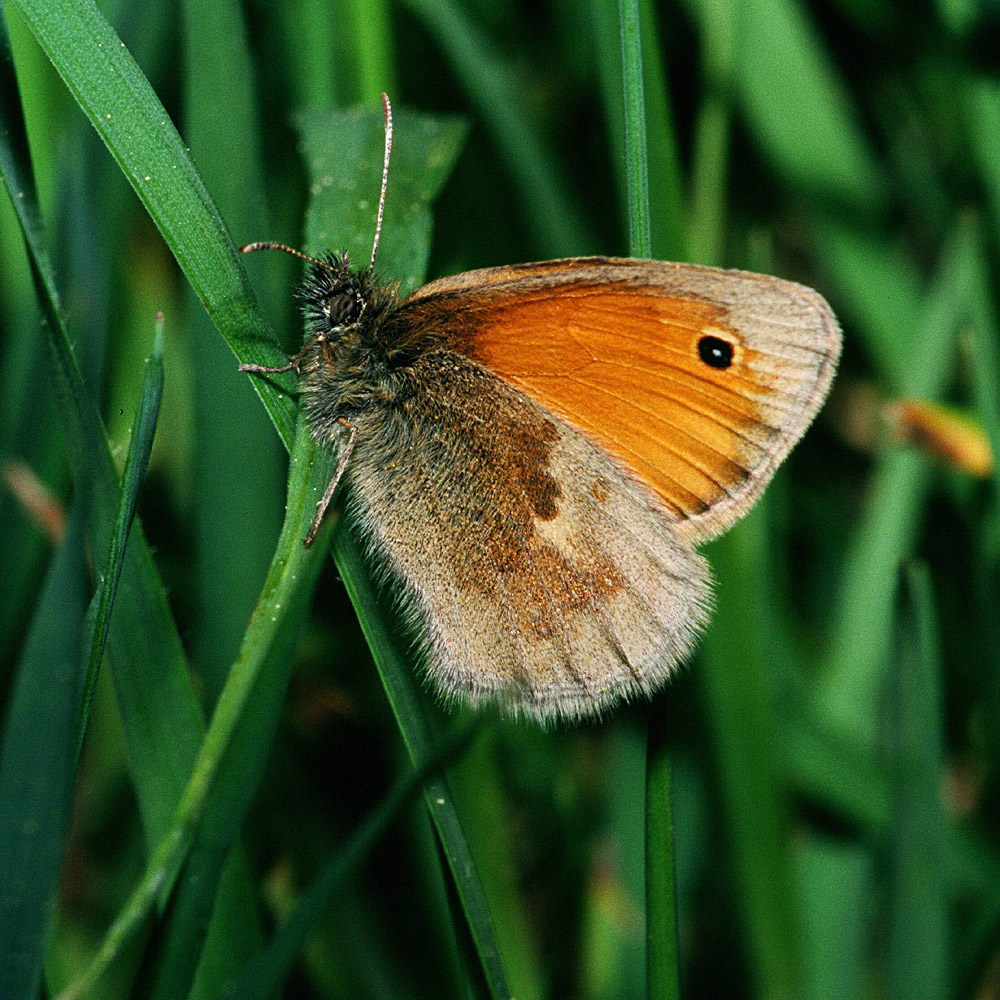
With a wingspan of about one inch (25 mm) and rather dowdy colouring, you may find this butterfly rather difficult to spot. At Fleet Pond, it is more likely to be seen on the Dry Heath or along the footpath that borders it. Its wings are a very pale golden colour, with the exception of the hindwing undersides which are shades of both pale and dark grey. The forewings have small “eye” spots close to the tips. When settled they sit with their wings closed and may even tuck their forewings behind their hindwings, which helps them to blend in with their surroundings.

Green or yellow eggs are laid singly on meadow grass and fescues during June. After a fortnight, the green caterpillars emerge and normally feed on the grass tips at night. The best way to see them is to check grassy areas with a torch during the hours of darkness – a task only likely to be tackled by keen entomologists!

The caterpillars, while still fairly small, hibernate during the winter, although they may feed on very mild days. After resumption of normal feeding in the spring, they pupate by late April and emerge towards the end of May or early June. This brood flies until early July.

There is a second brood that results from over-wintering eggs that can be seen flying during August and September. I have normally seen only one or two Small Heath butterflies at Fleet Pond but, when leading a “guided walk” there in 2005, I was surprised to see a group of five flying around each other, making the most of the sunshine. They have a rather “drunken” pattern of flight, which may help you to identify them.

Male butterflies establish a territory by perching on the ground and waiting for a female to come along. If another male comes into the territory, they engage in prolonged aerial battles to claim possession. Generally, the larger-winged butterfly wins and the smaller flies off to establish another territory.

If you see a female flying back and forth over a fairly small area of ground, she may be trying to gain the interest of a perching male. Having attracted her mate, the female lands and the male advances with a series of head butts. After mating, the female avoids other male territories. When laying her eggs, the first hundred or so are green, but the later ones are yellow. We do not know why this change of colour takes place.

Visit the blog in July for information about the Small Tortoiseshell.

Peter Martin acted as author for a booklet entitled “Blackwater Valley Butterflies” which contains photographs of all 32 species found in this area together with information about their life cycles. Copies are available for £2.50 plus £1.00 p.p. from Blackwater Valley Countryside Partnership, Ash Lock Cottage, Government Road, Aldershot, Hants, GU11 2PS. (Cheques should be made payable to B.V.C.P.).

Picture credit here.

Summer Grazing

summer grazing sm

Joanna Lawrence writes:

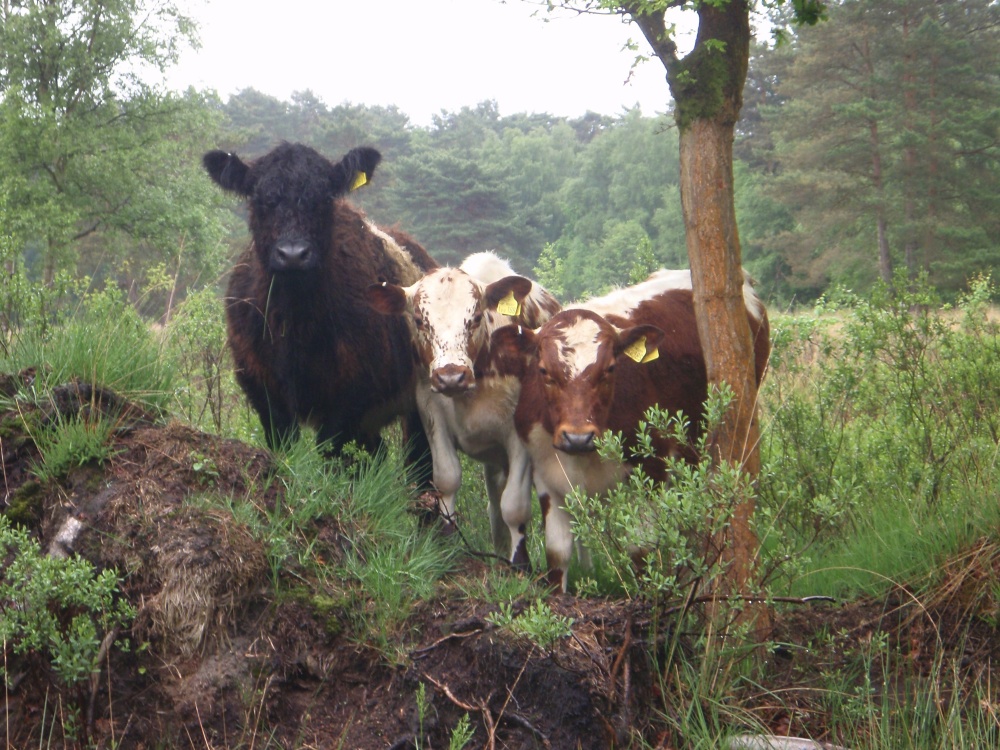
Summer at Fleet Pond is in full swing now that our cows have arrived on Wood Lane Heath.  The cows, from Miller’s Ark Farm near Odiham, are young males and go by the names Lynx, Lego and Lucas.

They are here to do the important job of eating the Purple Moor grass and the birch saplings which if left would take over on the heath to the detriment of important heathland species such as heather.  This section of heathland habitat is currently in great condition, as shown in botanical and invertebrate surveys that were carried out last summer which came up with some very positive results.  This is largely due to the grazing programme that has been running here since 2004.  Grazing is the traditional form of management for managing heathlands and it also reduces the need for manual management.

The cows are very used to people passing by, but we ask that all dogs be kept on leads when passing through the heath.  There is also plenty of food for them to eat so please do not feed them!

We would also like to take the opportunity to say a big thank you to all those “lookers” who keep a close eye on the cattle for us, it’s very much appreciated!

If there are any problems with the cattle, please contact the following numbers;

Miller’s Ark Graziers:  01256 701847

Hart Countryside Service Rangers:  01252 623443
Or e-mail; countryside@hart.gov.uk

How Deep Is The Pond?

opal-fleet-2009-smallPicture: Results of Bathymetric Survey of Fleet Pond

Colin Gray writes:

OPAL, the Open Air Laboratories network is an exciting new initiative supported by The Big Lottery Fund. OPAL is encouraging people to get back in touch with nature. A wide range of projects is planned. The first survey that encouraged anyone with an interest in nature to participate, in February 2009, asked people to survey the variety of earthworms that could be found close to their homes, in the garden, local park or nature reserve.

opal-worm-survey

An OPAL sponsored nation-wide survey started in November 2008 by University College London is looking at lakes and ponds in the UK and Fleet Pond was chosen as representative of lakes in the South East. Water quality, level of siltation, fish species and chemical analysis are all being studied.

OPAL has produced a bathymetric survey of Fleet Pond which depicts water depths in graphic form (see picture above). This shows very clearly just how serious the silt situation has become. Nowhere over the 52 acres (21 hectares) is the depth more than 0.82 metres. Large areas are less than 0.5 metres. Work to address this situation is urgent if we are not to lose over a third of the pond and to put the nature reserve at risk of losing SSSI notification.

To learn what you can do to help or to find more about OPAL visit their website here, send an e-mail here or phone 020 7942 5894.

How To Spot Butterflies

As you know, we are running a monthly series of articles on butterflies (see here and here for the April and May posts).

The Independent newspaper is running The Great British Butterfly Hunt and as part of this it gives tips on how to spot them. Here they are, as they might be useful whilst wandering around the pond or else in your back garden:

  • Butterflies are active in warm sunny weather, so choose days when the air temperature is above 14C and there is at least 50% sun
  • Butterflies are most active from 10am to 4.30pm
  • Most species like sheltered, sunny positions to bask or feed. Try sheltered gardens, parks, derelict land, hedgerows, tall grasses, bramble, wild flowers, woodland clearings or south-facing slopes (take care)
  • Certain garden plants are magnets. Butterflies visit to drink nectar through a long coiled proboscis (like a drinking straw). In spring, try dandelions and sweet rocket. In summer: buddleia (the “butterfly bush”), scabious, thistles, brambles and herbs in flower like majoram and thyme.
  • Approach slowly. They have all-round vision. Any quick movement will make them take off.
  • If you are lucky enough to live near chalk or limestone grassland, several beautiful and rare species of blue butterfly thrive in short-grazed vegetation.
  • Carry a picture guide or poster.
  • Binoculars can be very useful.
  • Follow a feeding butterfly to where it lands to feed. This sometimes offers a better look at its underside markings, helpful for identifying species like the green-veined white.
  • Three don’ts. Don’t handle caterpillars; they are delicate. Don’t catch butterflies with bare hands; their scaly wings do not regenerate. And try not to trample vegetation or wild flowers which may be used for breeding.

If you spot a species you can even add a sighting online, see here.