All posts by David Pottinger

January Volunteer Event – Icy Times! (Updated)

p1000197

Picture: An Iced-Over Fleet Pond Plus Two Keen Runners!

The Volunteer Event on Sunday 11 January had a really good turnout, helped considerably by a sizeable contingent from Fleet Wildlife Explorers (WEX for short) which is a junior section of the RSPB (Royal Society for the Protection of Birds).

Their leaders are Jonathan Mist (founder) and Andy Golder and further information on them can be found here (including an email contact address, see under Events). As it happens they are on the lookout for new leaders so if you are interested, please get in touch with Jonathan!

p1000200

Picture: A Really Good Turnout!

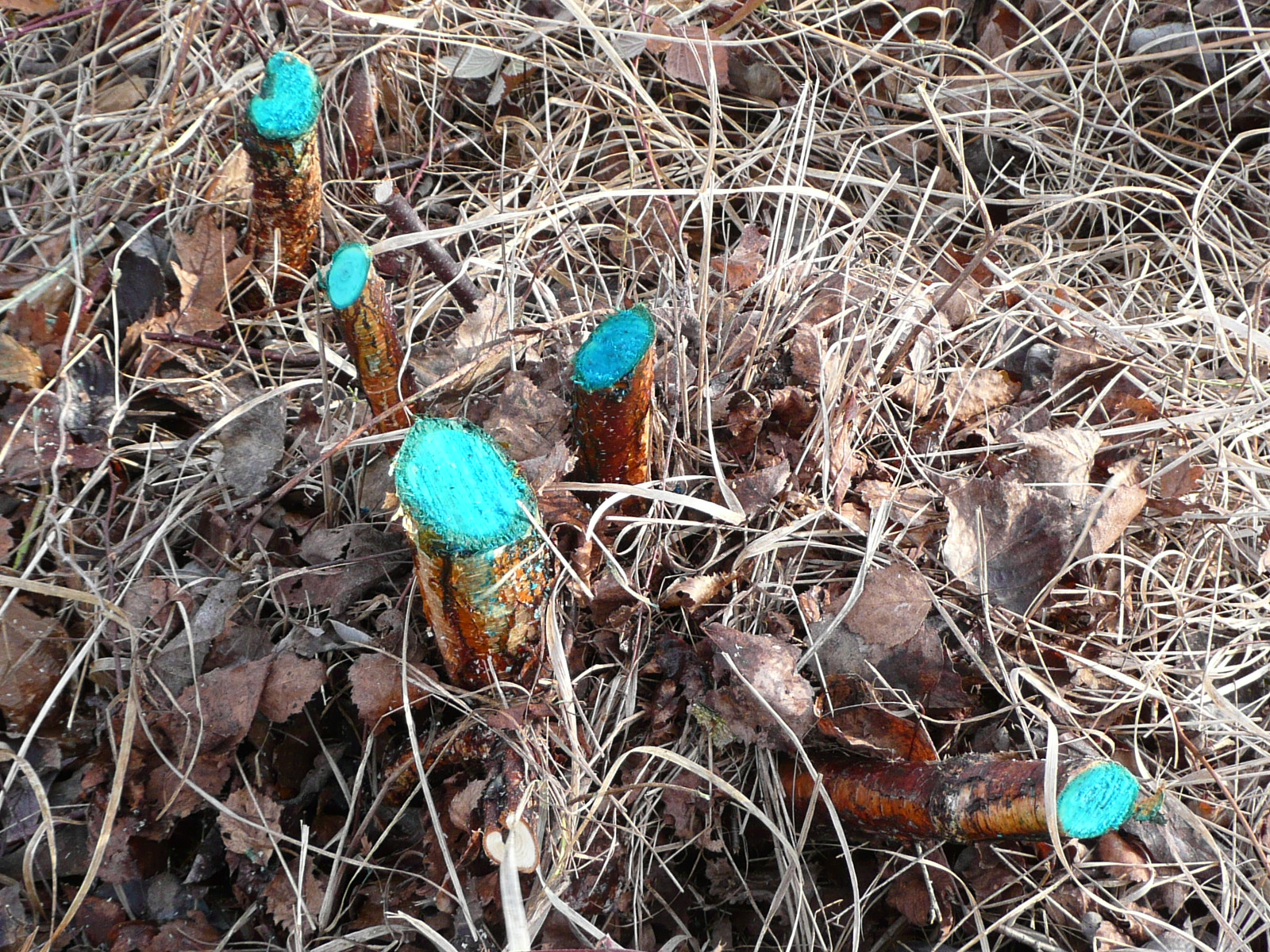
It was a very pleasant day, blue skies and mild, and the task was to cut back saplings (seen in the background). I’ve posted many pictures of this before – this time I’ll include the final aspect, the treatment of the stumps (so that they don’t grow again).
p1000207

Picture: Treated Sapling Stumps

The cut saplings are brought together in a couple of heaps and fires started (as described in a previous post). Before the site can be left, any remaining fires need to be dowsed for obvious reasons. Normally this is not a problem as water can be taken straight from the pond but on this occasion this was not possible and was instead taken from a bordering marsh area.

p1000211

Picture: Extracting Water From A Marsh

The next volunteer event will be on Sunday 8 February 2009.

Important Update:

A reader has kindly pointed out that there seems to be an apparent contradiction between requesting people not to go on the ice at Fleet Pond and then showing a picture where a member of a volunteer event might be construed as doing just that! To clarify matters, I’ll give some further details that were omitted in the original post to keep it to a reasonable length. My apologies for any unintentional misunderstandings this may have caused.

The explanation is actually quite interesting and brings in other topics discussed in previous posts.

The ‘Stay Off The Ice’ post arose from a request from the Pond Ranger. This was because members of the public were seen skating on the ice (sometimes unaccompanied and far from the bank), clearly potentially a dangerous activity. The post was put up to remind people of the dangers of skating and also that it is actually illegal thereby hopefully avoiding a serious incident.

The picture of the person about to gather water to extinguish the volunteer event fires was taken at a marsh that borders Fleet Pond. The general public are not allowed into this marsh area and it is clearly fenced off. The person in the picture has permission to go into this restricted area as it contains a dipwell and he (and a colleague) measure water levels there on a weekly basis throughout the year (more details given here). They both know the area well and are fully aware of any areas of risk.

I hope this explanation clarifies matters. In summary, suitable care and attention need to be taken at all times, in all areas.

I have also amended the last paragraph of the original post and changed the title of the last picture to make things a little clearer.
Birds To Look Out For In Winter

Colin Gray writes:

‘This is the time of year to look out for the birds that spend the winter with us.

siskin

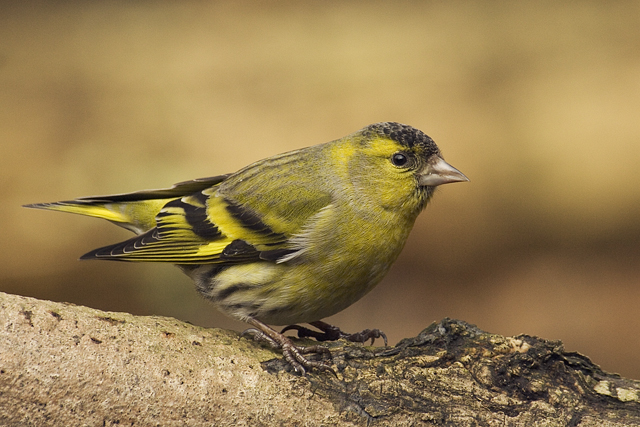
Keep your eyes skyward if you want to see the Siskins (above, see also here). These are small finches with bright yellow/green plumage and, for the males, black caps. They move around in large flocks feeding on the seeds of the alder trees. They are very active and very vocal. You will hear them chattering in high pitched voices high in the treetops and then suddenly without any apparent reason they will “explode” from the canopy and move en masse to another tree.

Siskins do breed in this country but they are not as obvious during summer as our more familiar birds.

redwing
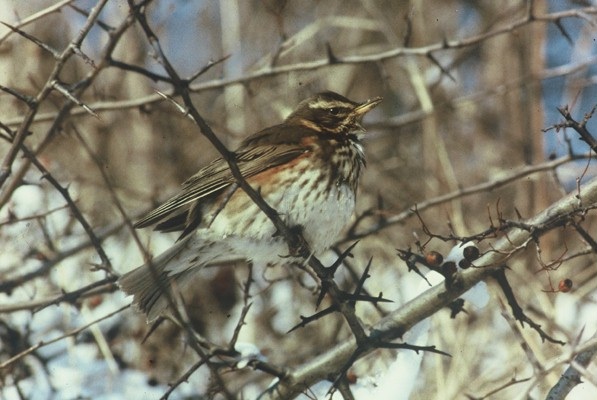
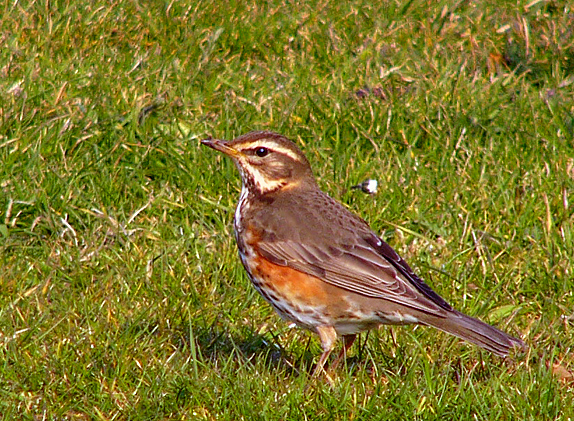
The long distance visitors include the Redwings (above and below) who move from Siberia when the winter cold closes in and find our climate, by comparison, much more pleasant. They will feed on berries and fruits. You might be lucky enough to see them in your garden if the Blackbirds and Song Thrushes have left any fruit. At Fleet Pond they can be seen turning over the fallen leaves like our Blackbirds do, looking for insects and seeds. They are members of the thrush family which includes our Blackbirds and Song and Mistle thrushes. “Red” wing refers to the flash of red under the wings when they fly. It is not so easy to see when the wings are closed. The markings to look for are the bright white eyebrow stripe and much whiter belly than the Song thrush.”

redwing21

Picture credits: Siskin and (top) Redwing from Wikipedia and (lower) Redwing from the RSPB.

There are lots of other high-quality Siskin and Redwing photos at RSPB Images (although they are watermarked).

The songs of the birds can also be heard from the RSPB site, see under Birds and Wildlife.

Volunteer Spotlight – Megan Spencer

At Fleet Pond Society, we always have a need for volunteers and these cover a wide range of backgrounds and skills.

As a recent example, Fleet Pond Society plan to sell bespoke sweatshirts later this year to help raise funds and we were in need of some graphic design expertise. Here’s the story:

Megan writes:

“Back in July this year I posted a small description of my desire to gain ‘real-life’ Graphic Design experience on an internet forum and Beth Pipe from Fleet Pond Society got in touch to see if I was interested in creating some designs for new sweatshirts. The rest as they say is history!

I am a 21 year old third year Graphic Design student studying at the University of Lincoln and am always on the look out for ‘live project’ experience. Growing up as a member of the YOC (Young Ornithologists Club) in Bromley, Kent and a real nature lover this project seemed an ideal project for me.

swan

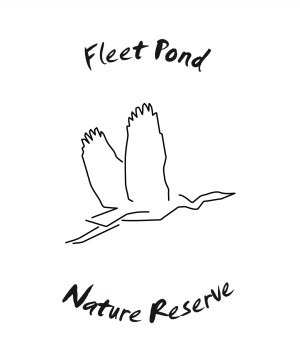
Picture: An Early Design (Final Version Has The Heron Below)

We began by discussing the different wildlife at Fleet Pond and I was given free reign to come up with the initial ideas. This way the committee could focus their vision and help to choose an appropriate design. This design project was very much a collaboration with the committee and it was important for me to produce something that not only they were happy with but that they could feel truly emulated Fleet Pond.

The initial ideas were made up of illustrations of pond life in outline and silhouette formats. Then after seeing my designs the committee decided they would like to see some more bird designs in the style of the Uffington horse.

finallogosmall1After a few more consultations and amendments the design was finalised. A heron in flight.

I am planning on becoming a full-time freelance Graphic Designer when I graduate in May this year working directly with design agencies and also with local businesses. My main focus is currently in the print, branding and advertising fields although I hope to expand on my web design knowledge to offer a broad range of design capabilities.

If you are interested, inspired or just curious about my work take a look at my blog or email me for more information. I am currently happy to negotiate work for little or no fee to gain valuable experience and to add to my portfolio.”

If you (or your friends and family) have skills that you think may be useful to the Society then please get in touch as there’s more going on than you might imagine! Contact details are in the About page.

RSPB Winter Walk – Birds In The Woodland

goldcrest-on-conifer

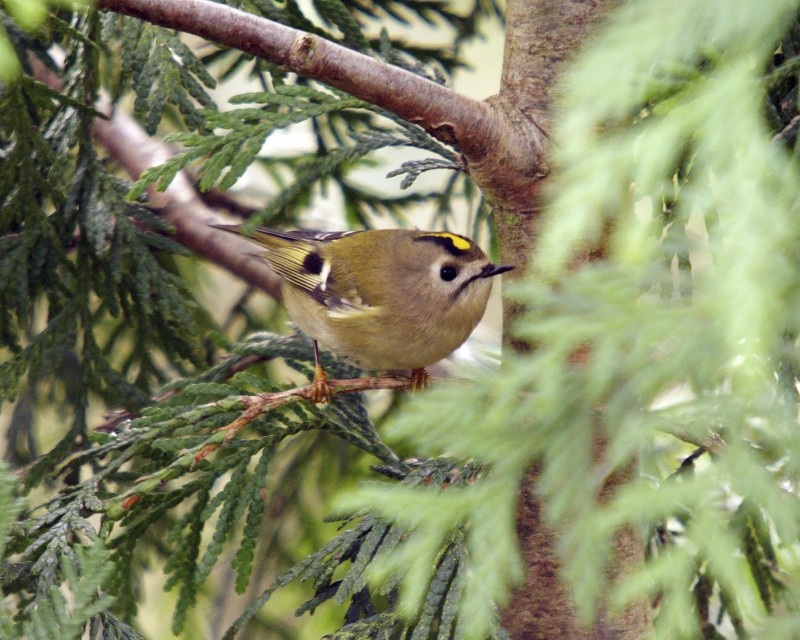
Picture: Goldcrest

On Sunday 21st December 2008, Peter Hutchins of the RSPB Basingstoke Local Group led a walk around the pond for seven members of the group, on their last outdoor meeting of the year.

The walk had two aspects, the Pond (earlier post) and the Woodland (this post).

For those of you unfamiliar with locations around the Pond, the About section of this blog gives a map. For information on birds, see RSPB and Wikipedia.

The report by Peter Hutchins of the morning’s events is as follows:

In thinner birch woodland, east of the pond, we saw active mixed tit flocks immediately, these far more energetic than the Black-headed Gulls drifting in overhead from the north. Magpie and Woodpigeon fed out in the open, whilst Robin and Wren were more elusive, their calls attracting our attention as they skulked. A Great Spotted Woodpecker was also vocal, eventually showing itself to the group, though only as a silhouette before moving off with its characteristic undulating flight. Goldfinch and Cormorant were also on the move, the former often from tree to tree, the latter circling over the pond before dropping in to join others already fishing there.

At Boathouse Corner a Siskin appeared overhead, a single bird that was not to prepare us for later. Dunnock and Goldcrest called, as we headed south, past Chestnut Grove.

Brookly Wood, on the south-western edge of the pond, was busier. Increasing numbers of Siskin coming in to feed in alder attracted a scattering of Lesser Redpoll, a minimum of 150 of the former being seen as a Sparrowhawk encouraged them into the air, whereas less than a handful of the latter were noted at any time. A Kingfisher was vocal about the woodland streams and another Great Spotted Woodpecker proved equally vociferous, though at least this bird was good enough to allow viewing for some time before moving again out of sight. The tit flocks here included the first Long-tails of the day, acrobatic about the spindlier honeysuckle stems and collectively verbal as they gleaned for invertebrates.

Picture: Common Kingfisher

Dense scrub on the edge of Kenilworth Wood held the watchers for some time, finches, thrushes and tits all progressively appearing from within the mass of tangled vegetation. A Redwing, at first heard hissing, and then sat in the open. This single bird was perhaps another indicator of just how mild it currently is? Siskin and Lesser Redpoll streamed over the treetops in voluble parties, the mass of alder cones not enough to allow them to settle as alarm ran through the flock repeatedly

The party split, well one went walk-about, as we headed towards Sandy Bay. The lost soul picking up two Grey Wagtail, Nuthatch and Treecreeper as compensation for the absence of the Group!

Back in to the woodland and the final side of the pond was covered. Tits and Goldcrests appeared in the skeletal remains of Coldstream Wood, some, though not all, managing to hear the shrill piping of the crests as they explored the remnants of the foliage still clinging stubbornly to otherwise naked branches. Open grassland at the back of the Sandhills added another thrush, the one and only Mistle of the day, as it sat close in to the woodland edge.

This report is an edited version (kindly provided by Michelle Salter) of the complete version that appears in the RSPB Basingstoke Local Group January 2009 Newsletter.

Picture credits: Goldcrest (iStock, courtesy of Michelle Salter) and Common Kingfisher.

PS Apologies for the error in the original blog post that had the picture of the Common Kingfisher accidentally incorrectly titled and referenced. Thanks to Peter for pointing this out.