All posts by David Pottinger

Adder Alert…

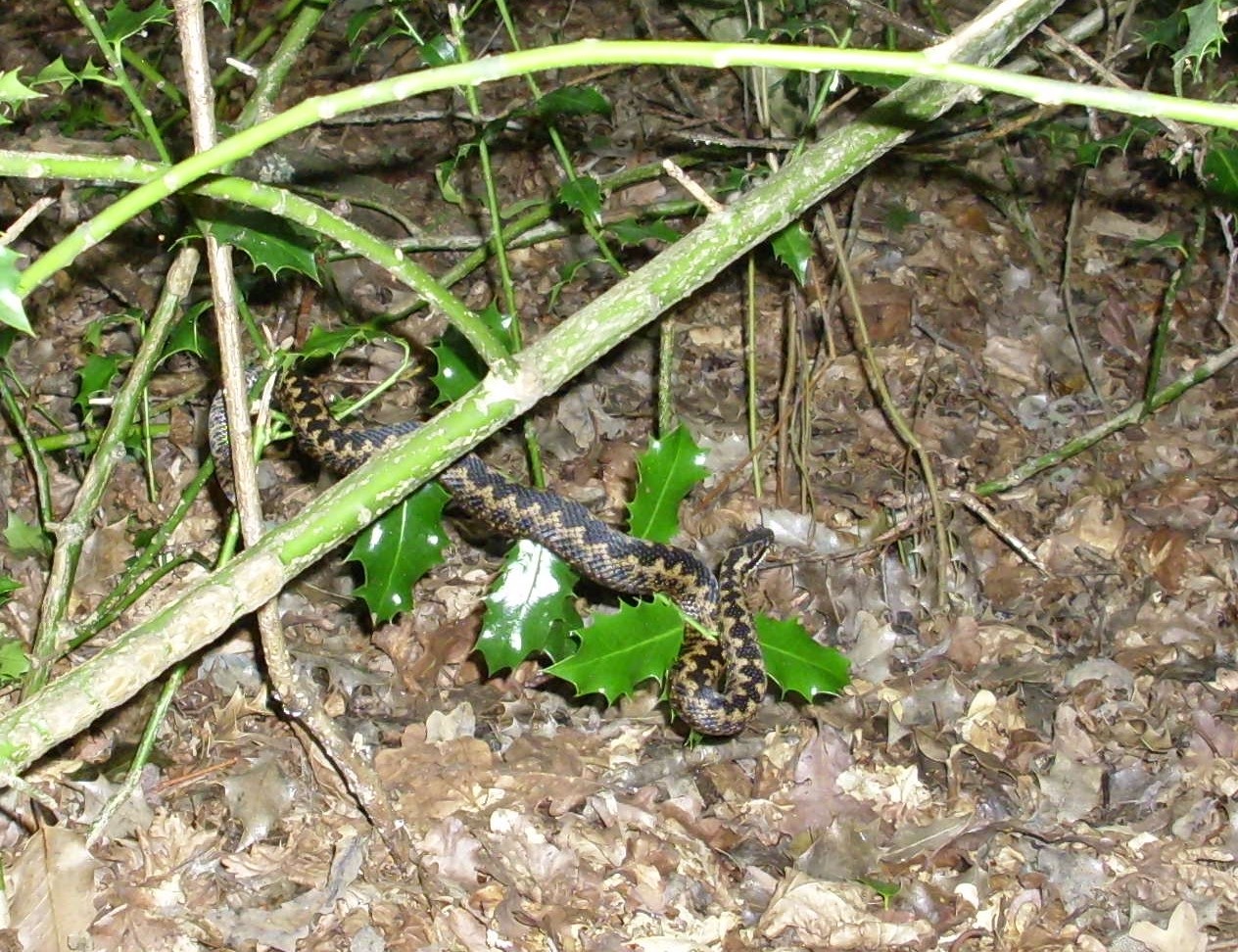
This fellow was spotted by Colin Gray recently near Fleet Pond. It was moving slowly as it was a cool morning. It was gently helped across the footpath as there were several dog walkers in the vicinity!

The marshland surrounding Fleet Pond supports a rich diversity of wetland plants. Purple and yellow loosestrife, marsh lousewort, the rarer marsh cinquefoil and many different rushes and sedges are included. These support many different insects, spiders and snails, which in turn provide food for birds, small mammals, frogs and toads. The marshes support Fleet Pond’s two snakes. The grass snake is a good swimmer and finds most of its prey in wetland areas. The adder, more usually associated with dry habitat, is often found hunting in the wetlands where it is less likely to be disturbed by people and dogs.

Start of Volunteering 2008/09

Here is the list of forthcoming volunteering days for Fleet Pond. They are held on the second Sunday of each month and run from September to June. All members of the public are very welcome to attend.

Sunday 14th September 2008- Fugelmere Marsh (clear alder and sallow)

Sunday 12th October 2008- Gelvert Marsh (remove alder)

Sunday 9th November 2008- Coldstream Marsh (removal of sallow/alder)

Sunday 14th December 2008- Gelvert Marsh (or Coldstream Marsh)

Sunday 11th January 2009- Dry Heath (remove birch saplings)

Sunday 8th February 2009- Dry Heath (remove birch saplings)

Sunday 8th March 2009- Gelvert Glade (removal of birches)

Sunday 12th April 2009 – TBA

Sunday 10th May 2009 – TBA

Sunday 14th June 2009 – TBA

All tasks start from the Countryside Workshop, Old Pump House Close (next to 65 Kenilworth Road), Fleet at 9.30 am. All tools are provided. Please wear old clothing and strong waterproof boots or wellingtons. Protective gloves are available and wellingtons can be supplied for young volunteers. A warm drink and a tasty snack is supplied mid-morning (but bring your own supplies if staying much longer than midday).

Tasks usually stop around 1.30 or 2 pm but we can continue after lunch if enough volunteers decide to stay (this is relatively unusual). For further information, please see About section above (which includes a map of locations).

Many people take photos at Fleet Pond and then post them on the web – the picture above is an example.

Plane on Fleet Pond!

Well, not recently! However it’s true that Fleet Pond was used for the testing of hydroplanes by Geoffrey de Havilland and his log book records several flights from April 1912.

At this time, de Havilland was working as a test pilot and designer at the (then) Balloon Factory at Farnborough. This later became the Royal Aircraft Establishment.

Recently (July 2008) a book has been published on The Balloon Factory by Alexander Frater and reviewed here. If anyone has a copy and has found any further information on the role of Fleet Pond, please let us know (via a comment below)!